G20
Argentina Australia Brazil Canada China France Germany India Indonesia Italy Japan Mexico Russia Saudi Arabia South Africa South Korea
Turkey The United Kingdom The United States The European Union The African Union
All Articles
-
History of G20Lijstitem 1
Elementary school" and "primary school" refer to the same stage of education, though "primary school" is more common in the UK and some other countries, while "elementary school" is prevalent in North America and the Philippines.
-
G20 AgendaLijstitem 2
Academic achievements are students' accomplishments and progress in meeting their educational goals, including high grades, standardized test scores, awards, and participation in advanced coursework or competitions.
-
Summit ReportsLijstitem 3
Nutrition education in schools is a key platform for improving children's diets and health, fostering positive eating habits from a young age, and potentially reducing the risk of chronic diseases.
-
Analyses About G20Lijstitem 4
European Citizenship Education is a policy priority aimed at cultivating knowledgeable, engaged, and responsible citizens by fostering democratic values, human rights, and active participation at local, national, and EU levels.
All Articles
-
Relations Between G20 CountriesLijstitem 1
Elementary school" and "primary school" refer to the same stage of education, though "primary school" is more common in the UK and some other countries, while "elementary school" is prevalent in North America and the Philippines.
-
Overview of G20 membersLijstitem 2
Academic achievements are students' accomplishments and progress in meeting their educational goals, including high grades, standardized test scores, awards, and participation in advanced coursework or competitions.
-
Origins G20 OraganizationLijstitem 3
Nutrition education in schools is a key platform for improving children's diets and health, fostering positive eating habits from a young age, and potentially reducing the risk of chronic diseases.
-
New Climate ProgramLijstitem 4
European Citizenship Education is a policy priority aimed at cultivating knowledgeable, engaged, and responsible citizens by fostering democratic values, human rights, and active participation at local, national, and EU levels.
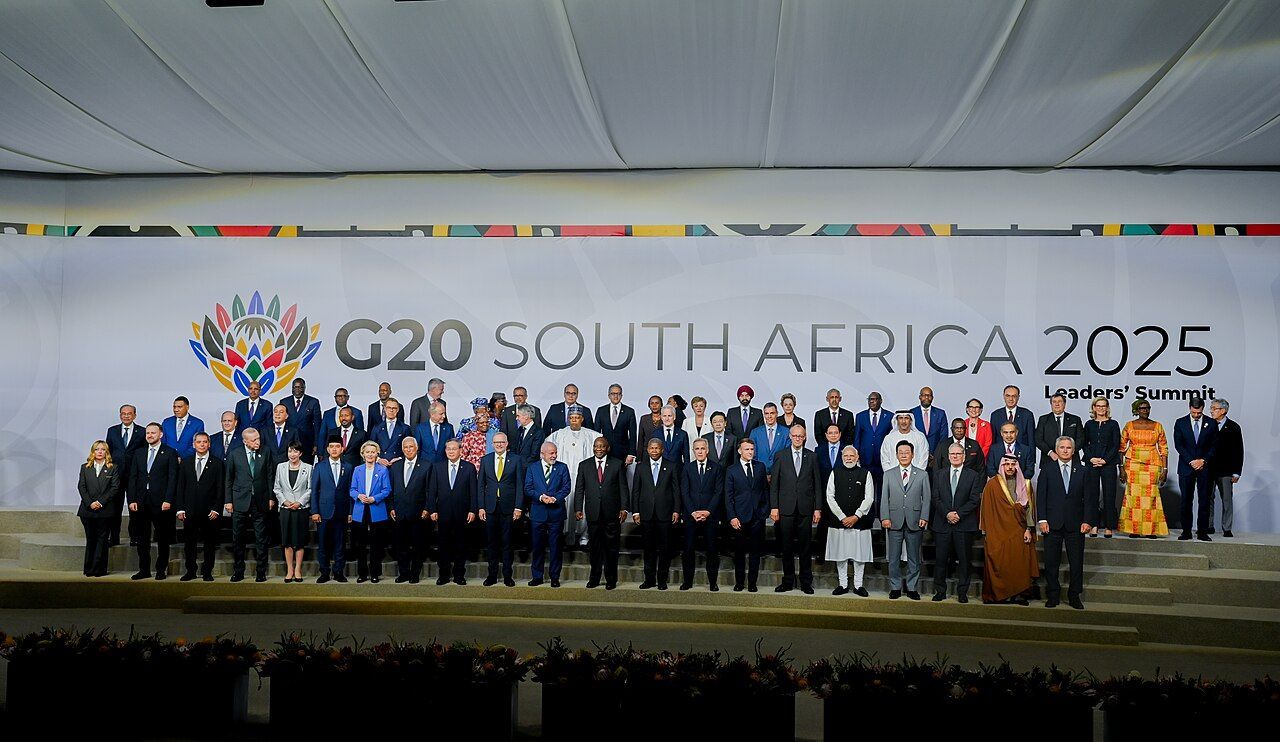
The G20 or Group of 20 is an intergovernmental forum comprising 19 sovereign countries, the European Union (EU), and the African Union (AU).[2][3] It works to address major issues related to the global economy, such as international financial stability, climate change mitigation and sustainable development, through annual meetings of heads of state and heads of government.[4]
The 19 member states of the G20 account for around 85% of gross world product(GWP),[5] 75% of international trade, 56% of the global population,[5] and 60% of the world's land area; including the EU and AU, the G20 comprises 78.9% of global population and 83.9% of global CO2 emissions from fossil energy.[6]
The G20 was founded in 1999 in response to several world economic crises.[7] Since 2008, it has convened at least once a year, with summits involving each member's head of government or state, finance minister, or foreign minister, and other high-ranking officials; the EU is represented by the European Commission and the European Central Bank.[8][9][b]
Other countries, international organizations, and nongovernmental organizations are invited to attend the summits, some permanently. The African Unionjoined as the 21st member at the 2023 summit in India and was officially represented at the 2024 summit in Brazil.
In its 2009 summit, the G20 declared itself the primary venue for international economic and financial cooperation.[10] The group's stature has risen during the subsequent decade, and it is recognised by analysts as exercising considerable global influence;[11]it is also criticised for its limited membership,[12] lack of enforcement powers,[13] and for the alleged undermining of existing international institutions.[12] Summits are often met with protests, particularly by anti-globalization groups.[14][15]
Members
As of 2023, there are 21 members in the group: Argentina, Australia, Brazil, Canada, China, France, Germany, India, Indonesia, Italy, Japan, Mexico, Russia, Saudi Arabia, South Africa, South Korea, Turkey, the United Kingdom, the United States, the European Unionand the African Union. Guest invitees include, among others, The Netherlands, Spain, the United Nations, the World Bank and ASEAN.[51][56]
Representatives include, at the leaders' summits, the leaders of nineteen countries, the African Union and of the European Union, and, at the ministerial-level meetings, the finance ministers and central bank governors of nineteen countries, the African Union and of the European Union.
In addition, each year, the G20's guests include Spain;[57] the Chair of ASEAN; a representative of the New Partnership for Africa's Development (NEPAD) and a country (sometimes more than one) invited by the presidency, usually from its own region.[51][58][59]
The first of the tables below lists the member entities and their leaders, finance ministers and central bank governors. The second table lists relevant statistics such as population and GDP figures for each member, as well as detailing memberships of other international organizations, such as the G7, BRICS and MIKTA. Total GDP figures are given in millions of US dollars.
In September 2023, at the 18th G20 Summit, Indian PM Narendra Modi announced that the African Union has been included as a member of the G20, making it the 21st member.[60]