
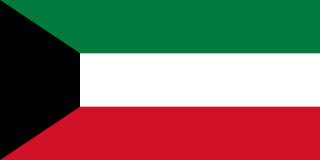
Kuwait
A strategic Gulf state positioned at the intersection of energy, finance, maritime connectivity and regional security. Kuwait combines substantial sovereign wealth and hydrocarbon resources with an increasingly important agenda of economic diversification, infrastructure modernization, digital transformation and human-capital development.
Kuwait is a compact but highly consequential Gulf economy whose strategic importance extends beyond its geographic size. Its position at the northern Gulf, large hydrocarbon reserves, sovereign financial assets and proximity to major regional markets give the country significant economic and geopolitical weight.
The central research question for Kuwait is how effectively the country can convert resource wealth into a more diversified, productive and digitally capable economy while maintaining fiscal resilience, social stability and environmental sustainability.
Country Overview
Kuwait is a constitutional monarchy on the northwestern Gulf coast, bordering Iraq and Saudi Arabia. Kuwait City functions as the country's principal political, financial and metropolitan centre. The country has historically combined oil wealth with a strong public sector and extensive sovereign financial capacity.
Data Profile
Economic Scale
GDP reached approximately $157.2 billion in 2025, with GDP per capita of about $32,312 in current US dollars.
Recovery
The economy returned to positive growth in 2025 following contractions associated with oil-production constraints and weaker activity.
Social Capacity
High life expectancy and substantial public resources provide a strong foundation for human development, even as labour-market structure remains a major policy issue.
History & Geography
Kuwait's historical development is closely connected to maritime trade, pearling, shipbuilding and Gulf commerce. Its location near the northern Gulf made the territory a meeting point for commercial networks linking Mesopotamia, Arabia and the wider Indian Ocean.
Modern Kuwait developed rapidly following the transformation of its petroleum economy during the twentieth century, producing one of the Gulf's most distinctive combinations of traditional maritime heritage, urban modernization and resource wealth.
Geographic Position
Northern Gulf location with maritime access, proximity to Iraq and Saudi Arabia, and strategic links to Gulf shipping routes.
National Landscape
Desert Systems
Kuwait's landscape is predominantly arid, making water security, heat resilience and land management central to national planning.
Gulf Coast
Coastal ecosystems and marine environments are economically, environmentally and strategically important.
Urban Concentration
Population, economic activity and public infrastructure are strongly concentrated around Kuwait City and the wider metropolitan region.
Economy
Hydrocarbons remain the foundation of Kuwait's fiscal and external position, while financial services, construction, real estate, health and other non-oil activities provide an increasingly important second layer of economic activity.
Macroeconomic Development
The recovery reflects the gradual unwinding of OPEC+ production constraints, stronger oil activity and renewed non-oil sector momentum. Longer-term performance will depend on fiscal modernization, investment and diversification.
Strategic Transformation
Politics & Governance
Constitutional Framework
Kuwait combines hereditary monarchy with a constitutional system and elected parliamentary institutions, creating a distinctive political model within the Gulf.
Governance Priorities
Public-sector efficiency, fiscal sustainability, regulatory quality, investment execution and institutional capacity are central to the country's transformation agenda.
Transformation Timeline
Maritime Kuwait
Trade, pearling, shipbuilding and Gulf commerce form the foundations of Kuwait's early economic identity.
Oil Transformation
Petroleum revenues transform public finance, infrastructure, urban development and living standards.
Invasion & Liberation
The Iraqi invasion and subsequent liberation become a defining event in Kuwait's contemporary national and security history.
Diversification & Digitalization
Kuwait increasingly focuses on infrastructure, private investment, digital government and economic diversification.
Economy & Business
Finance
Kuwait has one of the Gulf's established financial ecosystems, supported by banks, investment institutions and sovereign capital.
Infrastructure
Large infrastructure projects provide an important channel for investment and domestic economic activity.
Private Sector
Increasing private-sector productivity is essential to long-term diversification and employment generation.
Population & Demography
Kuwait's demographic structure is strongly shaped by international migration and the large role of expatriate workers. Demographic policy, labour-market segmentation and productivity are therefore closely linked.
Education & Human Capital
Kuwait has extensive public investment capacity in education and human development. The strategic challenge is increasingly about quality, skills alignment and the relationship between education, innovation and private-sector employment.
TEDRIC Focus
STEM education, research universities, technical skills, lifelong learning, entrepreneurship and future-oriented workforce planning.
Science, Technology & Innovation
AI & Data
Artificial intelligence, data infrastructure and digital public services offer major opportunities for productivity improvement.
Research
Strengthening university-industry research links can support diversification and locally relevant innovation.
Smart Infrastructure
Digital infrastructure can improve urban systems, energy efficiency, transport and government services.
Healthcare & Social Development
High Human Development Capacity
A life expectancy of approximately 85 years indicates strong aggregate health outcomes and extensive access to healthcare.
Future Priorities
Prevention, healthy ageing, digital health, healthcare productivity and workforce specialization will become increasingly important.
Infrastructure & Digital Transformation
Urban Infrastructure
Kuwait's metropolitan system requires continuous investment in roads, housing, public services and urban resilience.
Digital Government
Digital public services can reduce transaction costs and improve government responsiveness.
Logistics
Kuwait's geographic position creates opportunities for stronger transport, logistics and regional connectivity systems.
Environment & Climate
Extreme heat, water scarcity, coastal exposure and dependence on energy-intensive systems make climate resilience a strategic national issue.
Kuwait's future environmental strategy will require energy efficiency, water management, coastal protection, cleaner technologies and adaptation to rising temperatures.
International Relations & Geopolitics
Gulf Cooperation
Kuwait plays an important role in GCC diplomacy and Gulf security.
Neighbourhood
Relations with Iraq and Saudi Arabia remain central to Kuwait's geopolitical environment.
Strategic Partnerships
Kuwait maintains extensive international economic, diplomatic and security partnerships.
Defence & Security
Trade, Investment & Diversification
Kuwait's investment strategy is closely connected to its sovereign wealth, energy position and infrastructure needs. The long-term opportunity lies in converting financial capacity into productive domestic investment and internationally competitive non-oil sectors.
Cities & Urban Systems

Kuwait City
Kuwait City concentrates government, finance, business, culture and major urban infrastructure.
Urban Research Priorities
Mobility, housing, public space, heat resilience, smart-city infrastructure and sustainable urban planning.
Faith & Religious Heritage
Islamic Heritage
Islam forms a central part of Kuwait's social, cultural and national identity.
Urban Mosques
Religious architecture forms an important component of Kuwait's contemporary urban landscape.
Social Cohesion
Religious and cultural institutions contribute to community life and social identity.
Failaka Island & Archaeological Heritage

Palimpsest of Civilizations
Failaka preserves layers of human settlement and maritime history extending across several periods of Gulf civilization.
UNESCO added “Failaka Island: A Palimpsest of Human Civilizations” to Kuwait's Tentative List in 2025.
UNESCO World Heritage
Natural Environment
Marine Ecosystems
Gulf waters and coastal environments are important ecological and economic assets.
Islands
Kuwait's islands provide distinctive ecological, archaeological and strategic environments.
Desert Ecology
Desert biodiversity and land restoration are increasingly relevant to climate adaptation.
Tourism & Cultural Economy
Kuwait's cultural economy can build on maritime history, architecture, museums, contemporary culture, public parks, food culture and archaeological landscapes.
The development of cultural tourism offers a pathway to strengthen Kuwait's international identity beyond its traditional energy profile.
High-Potential Assets
Failaka Island
Kuwait Towers
Historic Kuwait
Museums & Cultural Institutions
Marine & Coastal Experiences
Strategic Outlook
Opportunity
Strong sovereign financial capacity and strategic geography.
Challenge
Dependence on hydrocarbons and public-sector economic structures.
Priority
Diversification, productivity, digital transformation and reform.
TEDRIC Research Priorities
Economy
Oil dependence, fiscal policy and diversification.
Human Capital
Education, skills and labour-market transformation.
Technology
AI, digital government and innovation ecosystems.
Environment
Heat, water, energy and climate resilience.
TEDRIC Perspective
TEDRIC Research Dashboard
Economic Resilience
High financial buffers with significant oil exposure.
Transformation
Strong opportunity for infrastructure and digital modernization.
Strategic Position
Important Gulf geography linking energy, trade and security.
Research Sources
Kuwait country data, World Development Indicators and Gulf Economic Updates.
Kuwait State Party profile and Tentative List.
Kuwait national statistics, planning and public-sector information.
Comparative economic, demographic, environmental and geopolitical analysis.
TEDRIC country research pages are analytical resources and should be read alongside official statistical releases and primary institutional sources for detailed policy or investment decisions.
Kuwait
A strategic Gulf country whose future trajectory will be shaped by the relationship between energy wealth, diversification, technology, human capital, infrastructure and regional connectivity.