

French Guiana
A comprehensive TEDRIC research profile of French Guiana — a strategically located South American territory combining Amazonian biodiversity, European institutions, advanced space infrastructure and a rapidly evolving development agenda.
Political & Constitutional Status
French Guiana is part of the French Republic and the European Union
French Guiana is not an independent sovereign state. It is a French overseas department and region in northeastern South America. Its institutional, economic and strategic profile therefore differs from the sovereign states of Guyana and Suriname that border it. At the same time, its location gives France and the European Union a direct territorial presence on the South American continent.
This combination creates a distinctive research environment: European political and legal institutions coexist with Amazonian geography, Caribbean–South American cultural networks, a young and rapidly growing population, and one of Europe's most strategically important space-launch infrastructures.
Territory Overview
European Territory in South America
French Guiana combines French public institutions, the euro and European Union frameworks with a South American geographic setting.
Amazonian Environment
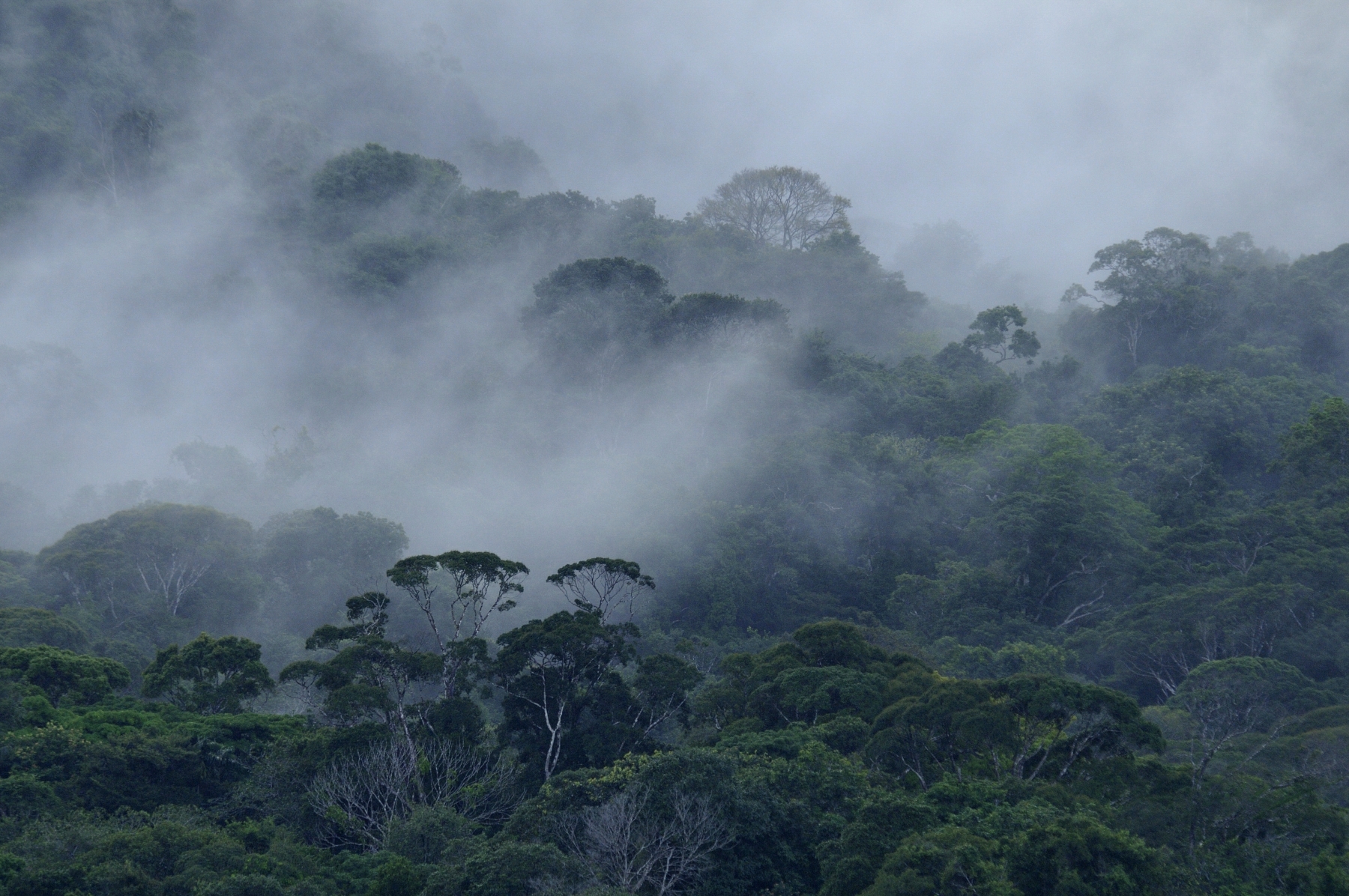
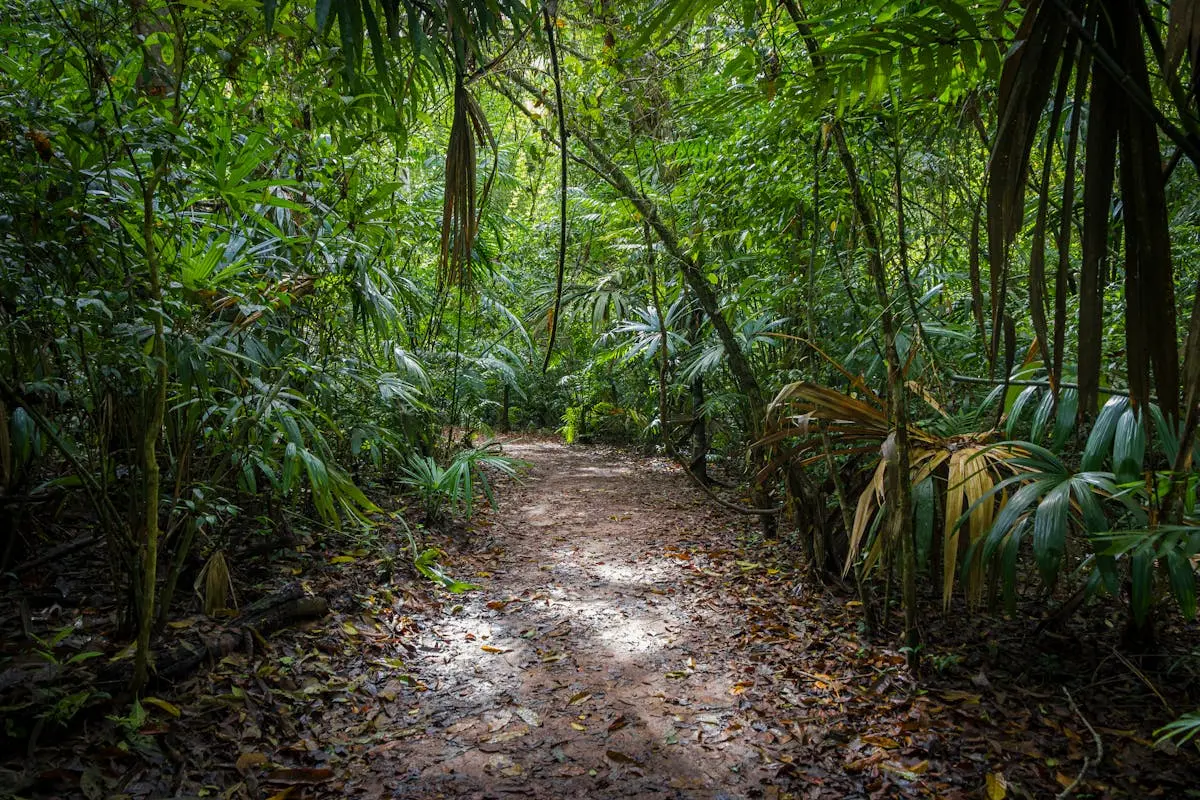
Most of the territory is covered by tropical forest and belongs to one of the world's most important biodiversity regions.
Space & Technology
Kourou hosts Europe's Spaceport, making French Guiana a global node in satellite launch, space technology and strategic infrastructure.
French Guiana at a Glance
Geography & Strategic Location
Brazil
French Guiana shares a long southern and southeastern border with Brazil, linking the territory directly to the Amazon basin and northern Brazil.
Suriname
The Maroni River forms a major part of the western frontier, connecting French Guiana to Suriname and the wider Guiana Shield.
Atlantic Ocean
The Atlantic coastline gives the territory direct maritime access to Caribbean, Atlantic and South American networks.
French Guiana in Images

Economic Snapshot
The economy combines public administration and services with construction, commerce, agriculture, fishing, gold mining and aerospace activity. In 2025, the economy returned to growth, with real GDP increasing by 3.9%, supported by a recovery in space-related activity.
Per-capita GDP remains significantly below the French national level. The gap is influenced by the territory's exceptionally young demographic structure and its rapid population growth.
Economic Development
Real GDP Growth — French Guiana
Source: INSEE / CEROM. The chart shows real GDP growth, not nominal GDP.
Space Industry & Kourou
Europe's Spaceport is French Guiana's defining strategic asset
The Centre Spatial Guyanais in Kourou provides Europe with a strategic launch base close to the equator. Its location is advantageous for orbital launches, while its infrastructure connects French Guiana to European aerospace engineering, satellite technology, defence, telecommunications and Earth-observation systems.
Ariane 6
Ariane 6 is Europe's next-generation heavy launcher. The system entered operational service from Kourou and is being expanded through both Ariane 62 and Ariane 64 configurations.
Vega-C
Europe's Vega-C provides a complementary launch capability for smaller and medium-sized payloads and expands the diversity of missions conducted from Kourou.
Multi-Operator Future
The spaceport is being modernized to accommodate new launch operators and a broader ecosystem of European and international commercial space activity.
French Guiana Space Timeline
France selected Kourou for its space programme, beginning the transformation of the coastal territory into a major launch centre.
European cooperation transformed the Guiana Space Centre into one of the world's most important satellite launch locations.
The Vega programme expanded Europe's launch portfolio from Kourou, adding a lighter launcher alongside Ariane.
Ariane 6 completed its inaugural flight from the European spaceport, beginning a new phase for European independent access to space.
The spaceport recorded seven launches, including Ariane 6 and Vega-C, while modernization accelerated.
New operators, Ariane 6 missions, Vega-C activity and renewable-energy projects are reshaping the spaceport's long-term ecosystem.
Space Economy & Technology
Launch Services
Ariane 6 and Vega-C support Europe's independent launch capability.
Earth Observation
Satellite missions support climate monitoring, agriculture, disaster management and scientific research.
Telecommunications
Commercial satellite constellations create new launch demand and connectivity opportunities.
Defence & Security
Space-based observation and communications are increasingly important to European strategic autonomy.
Energy Transition at the Spaceport
Space infrastructure is becoming part of the territory's energy transition
The Guiana Space Centre has begun expanding photovoltaic generation and developing renewable hydrogen through the Hyguane programme. These projects seek to reduce pressure on the local electricity network and demonstrate how a major industrial and aerospace site can integrate lower-carbon energy technologies.
Solar Power
A first photovoltaic field entered service in 2025, with additional solar capacity planned.
Renewable Hydrogen
Hyguane aims to produce renewable hydrogen and develop specialized training for the emerging hydrogen sector.
Industrial Demonstration
The spaceport can function as a real-world test environment for clean industrial energy systems.
Development Indicators
Human Development Challenge
The territory's most important development challenge is not simply generating economic activity but translating investment and public infrastructure into employment, skills, housing, education and long-term social mobility.
In 2025, 17% of the active population was unemployed, while 28% of people aged 15–64 were either unemployed or in the unemployment halo and wanted to work.
Population & Demographic Structure
Young Population
Half of the population is under 25, creating both a major human-capital opportunity and a substantial demand for education, employment and housing.
Demographic Growth
Population growth has remained significantly faster than in metropolitan France, although the pace has slowed in recent years.
Migration
Migration from neighbouring South American and Caribbean countries has contributed to the territory's demographic and cultural complexity.
Education & Human Capital
School Access
Expanding educational capacity is essential in a territory with strong demographic growth and a very young population.
STEM & Space Skills
Aerospace, engineering, electronics, digital systems and scientific research offer high-value pathways for young Guyanese.
Vocational Training
Technical education can connect young people to construction, energy, logistics, aerospace, tourism and environmental sectors.
Science, Technology & Innovation
Space Science
Kourou creates opportunities for aerospace engineering, satellite operations, Earth observation and space-related research.
Amazon Research
Biodiversity, climate, forestry, hydrology and tropical medicine create an exceptional scientific research environment.
Digital Transformation
Better connectivity and digital public services can reduce geographic isolation and improve access to education, healthcare and markets.
Healthcare & Social Development
Public Health
French public-health institutions provide an important foundation for healthcare delivery across the territory.
Tropical Medicine
The Amazonian environment creates major research opportunities in tropical diseases, epidemiology and environmental health.
Access & Geography
Long distances and settlement patterns make healthcare accessibility a continuing infrastructure challenge.
Amazonia, Biodiversity & Natural Capital
French Guiana is an important European gateway into Amazonian science
The territory contains extensive tropical forest ecosystems with extraordinary biodiversity. Its forests, rivers, wetlands and coastal systems are important for climate regulation, ecological research, conservation and sustainable development. The central policy challenge is balancing environmental protection with infrastructure, housing, economic activity and the needs of a rapidly growing population.
Forest
Vast forest areas form the territory's dominant ecological landscape.
Guiana Shield
French Guiana forms part of the ancient Guiana Shield, one of South America's major geological and ecological regions.
Marine Systems
Atlantic coastal ecosystems are essential to fisheries, biodiversity and climate resilience.
Gold, Mining & Natural Resources
Gold Mining
Gold has long been part of the Guyanese economy. The sector includes regulated industrial activity as well as significant illegal mining, particularly in remote forest regions.
Environmental Pressure
Illegal mining can create deforestation, mercury contamination, river degradation and difficult law-enforcement challenges. Sustainable resource governance is therefore a central policy issue.
Agriculture, Food & Local Production
Rice
Rice production is an important agricultural activity in suitable lowland areas.
Fruit
Tropical fruit and horticulture have opportunities for greater local value creation.
Food Security
Increasing local production can reduce dependence on imported food and strengthen territorial resilience.
Agri-Technology
Precision agriculture, irrigation and climate-smart farming can improve productivity.
Infrastructure & Connectivity
Roads
Road infrastructure is concentrated along the coastal development corridor.
Ports
Maritime infrastructure connects the territory with France, the Caribbean and South America.
Air Connectivity
Cayenne–Félix Eboué Airport provides the main international air connection.
Digital Infrastructure
Digital connectivity is increasingly essential for reducing the effects of geographic isolation.
International Relations & Geopolitics
France
French sovereignty provides the institutional, fiscal, defence and diplomatic framework of the territory.
European Union
French Guiana is part of the EU through its status as an outermost region, creating direct links to European programmes and policy.
Brazil
The border with Brazil creates opportunities for regional cooperation in infrastructure, health, environment and trade.
Suriname
Cross-border movement, the Maroni River and shared ecological systems make Suriname an important regional partner.
CARICOM & Caribbean
French Guiana's location connects it economically and culturally to the wider Caribbean even though it belongs institutionally to France.
Amazon Cooperation
Amazonian environmental cooperation provides a major platform for regional diplomacy and scientific collaboration.
Defence, Security & Strategic Infrastructure
French Guiana has strategic importance beyond its economic size
French sovereign forces protect the territory's borders, coastline, critical infrastructure and the Guiana Space Centre. Space-launch security is particularly important because Kourou is a strategic European and French asset. Security operations also address illegal gold mining, maritime activity, cross-border trafficking and environmental crime.
Culture, Society & Identity
Creole Heritage
Creole cultural traditions form an important component of Guyanese identity.
Indigenous Peoples
Indigenous communities contribute important knowledge of Amazonian ecosystems, culture and territorial history.
Maroon Communities
Maroon cultures represent an important part of the social and historical landscape.
Migration
Brazilian, Surinamese, Haitian and other Caribbean and South American communities contribute to the territory's multicultural character.
Tourism & Cultural Economy
Kourou Space Tourism
Launch viewing and space education provide an unusual tourism niche linking science, technology and public engagement.
Amazon Tourism
Forest excursions, wildlife, rivers and ecological tourism can support sustainable local development.
Cayenne
The capital provides the territory's principal cultural, culinary, administrative and commercial centre.
Faith & Religions
Christianity
Christian traditions remain important within the territory's diverse religious landscape.
Islam
Muslim communities contribute to the multicultural character of contemporary French Guiana.
Hindu & South Asian Traditions
South Asian cultural connections add to the territory's religious and cultural diversity.
Indigenous Traditions
Indigenous knowledge systems and relationships with the natural environment remain important cultural resources.
UNESCO & Heritage Context
French Guiana is represented through France
Because French Guiana is part of France, UNESCO World Heritage statistics are recorded under the French State rather than as a separate sovereign State Party.
Natural Heritage
The territory's Amazonian ecosystems constitute an important potential platform for future international conservation and heritage initiatives.
Space Heritage
The historical development of Kourou represents an exceptional combination of European technological infrastructure and tropical South American geography.
Environment, Climate & Resilience
Amazon Forest
Forest conservation is fundamental to biodiversity and climate policy.
Coastal Resilience
Coastal settlements face erosion, flooding and climate-related infrastructure risks.
Climate Science
French Guiana offers a valuable natural laboratory for monitoring tropical climate and ecological change.
Social Challenges & Opportunities
Employment
High unemployment remains one of the territory's most urgent structural challenges.
Young Population
A very young demographic structure creates enormous potential if education and labour-market integration improve.
Housing
Rapid demographic growth increases demand for housing and urban infrastructure.
Illegal Mining
Illegal gold mining creates environmental, security and governance pressures in remote regions.
Connectivity
Better physical and digital connectivity can reduce regional inequality.
Space Economy
Aerospace activity provides an opportunity to develop high-skilled local employment and technology ecosystems.
Strategic Outlook
French Guiana can become a bridge between Europe, the Caribbean and Amazonia
The territory's strategic value rests on an unusual combination: European institutions, a major spaceport, Amazonian biodiversity, South American geography and Caribbean cultural connections. The long-term challenge is to translate these structural advantages into broader local prosperity, particularly through education, technology, environmental science, sustainable tourism, digital infrastructure and high-value aerospace activity.
TEDRIC Research Priorities
Space Economy
Ariane 6, Vega-C, launch services and commercial space ecosystems.
Amazon Science
Biodiversity, climate, forestry, water systems and tropical medicine.
Human Capital
Youth employment, STEM education, vocational training and digital skills.
Energy Transition
Solar power, renewable hydrogen and low-carbon industrial infrastructure.
Regional Integration
Brazil, Suriname, Caribbean and wider Amazon cooperation.
Security
Border management, maritime security and illegal mining.
Digital Transformation
Connectivity, digital public services and technology entrepreneurship.
Sustainable Tourism
Amazon ecology, cultural heritage and Kourou space tourism.
Americas Regional Research Directory
TEDRIC Perspective
French Guiana is one of the most unusual strategic territories in the Americas.
It combines European sovereignty and institutions with South American geography, Amazonian ecology and a world-class spaceport. Its future significance will increasingly depend on whether these seemingly different assets can be connected: aerospace with education, Amazon science with climate policy, digital infrastructure with social inclusion, and European investment with sustainable regional development.
Research Sources
Explore TEDRIC's Americas Research
Continue through TEDRIC's research across the Americas, examining sovereign states and strategically important territories through politics, economics, science, technology, security, culture, environment and long-term development.
EXPLORE REGIONS