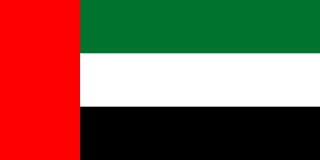
United Arab Emirates
A federal state at the intersection of the Arabian Peninsula, the Gulf and global economic networks — combining energy, trade, finance, technology, logistics, tourism and strategic diplomacy.
A Federation Built Around Connectivity
The United Arab Emirates is a federation of seven emirates whose development has been shaped by geography, energy resources, maritime trade and international connectivity.
Abu Dhabi serves as the federal capital and remains the largest emirate by territory and a central energy and institutional centre. Dubai has developed into a major global platform for aviation, logistics, tourism, finance and international business.
Sharjah, Ajman, Umm Al Quwain, Ras Al Khaimah and Fujairah add important cultural, industrial, coastal and geographical dimensions to the federation.
National Identity
Federation
The UAE was established as a federation in December 1971, creating a new political framework for the seven emirates.
Arabic
Arabic is the official language, while English is widely used throughout business, education, tourism and international services.
Islam
Islam is the official religion and remains an important element of the country's cultural and institutional identity.
Global Society
The UAE's population is highly international, contributing to its role as a global commercial and cultural hub.
Abu Dhabi & Dubai

Dubai
A globally connected metropolis centred on aviation, trade, logistics, tourism, finance, real estate and innovation.

Abu Dhabi
The federal capital and a major centre of energy, government, investment, culture and strategic policy.
Energy, Trade & Diversification
The UAE economy combines hydrocarbon wealth with a broad non-oil economy built around services, logistics, tourism, aviation, finance, manufacturing and technology.
Abu Dhabi remains strategically important for oil and gas, sovereign investment and energy policy. Dubai's economic model has developed around international commerce and global services.
Economic Structure
Business & Investment Environment
Finance
Dubai and Abu Dhabi operate major financial centres serving regional and international markets.
Logistics
Ports, airports, free zones and transport infrastructure support global supply-chain connectivity.
Technology
Artificial intelligence, digital government and advanced technology are increasingly strategic priorities.
Tourism
Hospitality, cultural institutions, aviation and entertainment form a major international tourism ecosystem.
A Gulf Crossroads
The UAE occupies a strategic position on the southern coast of the Arabian Gulf, connecting the Gulf, Arabian Sea, Indian Ocean and wider Asian, African and European markets.
Its location has supported the development of ports, airports, free zones, logistics corridors and international business networks.
Heritage & Cultural Landscape
Al Ain
Oases, archaeological sites, traditional irrigation systems and historic settlements form an important cultural landscape.
Desert Heritage
Camel culture, falconry, traditional crafts and desert knowledge remain important elements of UAE heritage.
Maritime Heritage
Pearling, fishing, navigation and Gulf maritime traditions remain central to the historical identity of coastal communities.

Sheikh Zayed Grand Mosque
One of Abu Dhabi's defining architectural landmarks, the mosque combines Islamic architectural traditions with a monumental contemporary design language.
Its white marble surfaces, domes, courtyards, reflective pools and detailed decorative work make it one of the UAE's most recognisable cultural and religious landmarks.
World Heritage
The UAE's heritage portfolio reflects the country's archaeological, oasis, landscape and cultural history.
Oases, archaeological remains, tombs, wells and traditional aflaj irrigation systems.
An archaeological landscape providing evidence of ancient human occupation and movement.
A mountainous natural landscape contributing to the UAE's protected environmental heritage.
A distinctive oasis environment associated with traditional water management and settlement.
Desert, Mountains & Coast
The UAE contains a diverse environmental geography extending from desert interiors to coastal ecosystems and the Hajar Mountains.
The country's natural environment creates both opportunities and challenges for water management, biodiversity conservation, urban development and climate adaptation.
Desert
Extensive desert landscapes dominate much of the territory.
Mountains
The Hajar Mountains create distinctive ecological zones.
Coast
Gulf and Arabian Sea environments support marine ecosystems.
Tourism & Global Visibility
Dubai
International tourism, architecture, shopping, events and hospitality.
Abu Dhabi
Museums, heritage sites, cultural institutions and major landmarks.
Ras Al Khaimah
Mountains, adventure tourism and coastal landscapes.
Fujairah
Arabian Sea coastline, mountains and maritime environments.
Education & Human Capital
Education is increasingly connected to the UAE's ambition to develop a knowledge-based and innovation-oriented economy.
Universities, international branch campuses, specialised research institutions and national scholarship programmes contribute to the country's human-capital strategy.
Technology & Innovation
Artificial Intelligence
AI is becoming a strategic component of public policy, research and economic development.
Space
The UAE has developed an increasingly visible national space and planetary exploration programme.
Digital Government
Digital public services and smart-city infrastructure are central elements of national transformation.
Advanced Industry
Manufacturing, robotics and advanced engineering are important to economic diversification.
Infrastructure as Strategic Capital
Airports, ports, highways, logistics zones, telecommunications and urban infrastructure underpin the UAE's global connectivity.
Aviation
Global passenger and cargo connectivity.
Ports
Major gateways for regional and international trade.
Transport
Integrated road and logistics infrastructure.
Connectivity
High-capacity digital and telecommunications networks.
Energy Transition
Oil & Gas
Hydrocarbons remain a major foundation of the national economy and energy strategy.
Solar Energy
High solar potential supports the expansion of renewable-energy capacity and large-scale solar projects.
Future Energy
Hydrogen, clean technologies and efficiency are increasingly important to long-term energy planning.
Water Security & Climate Resilience
Water scarcity and extreme heat make climate resilience a central strategic issue for the UAE.
Desalination, water efficiency, infrastructure resilience, urban planning and renewable energy are increasingly interconnected within national sustainability strategies.
Regional & Global Relations
Gulf
Active engagement with neighbouring Gulf states and regional institutions.
Asia
Strong commercial and energy relationships across Asian markets.
Europe
Trade, investment, aviation, technology and diplomatic relations.
Africa
Growing commercial, infrastructure and investment engagement.
Society & Demographic Transformation
International Population
The UAE has one of the world's most internationally diverse population environments.
Urbanisation
Rapid urban development has transformed coastal metropolitan areas.
Human Capital
Skills, education and talent attraction are central to the future economy.
Culture in a Global Environment
The UAE combines Arab and Islamic heritage with a highly international cultural environment.
Museums, galleries, libraries, festivals, architecture and heritage programmes contribute to a cultural ecosystem designed to connect local identity with international audiences.
Art
Contemporary and traditional visual culture.
Museums
Major cultural institutions and collections.
Heritage
Traditional architecture and cultural practices.
Literature
Arabic literary and intellectual traditions.
Toward a Knowledge Economy
AI
Artificial intelligence as a cross-sector technology.
Space
Research, exploration and space-related capabilities.
Finance
Regional and global financial services.
Advanced Industry
Technology-intensive manufacturing and engineering.
Development Priorities
Federation
The United Arab Emirates is established as a federation of seven emirates.
Infrastructure Expansion
Major investments in infrastructure, ports, roads and aviation accelerate national connectivity.
Globalisation
The UAE expands its international role through tourism, finance, logistics and investment.
Technology & Diversification
Artificial intelligence, space, advanced manufacturing and energy transition become increasingly prominent.
Strategic Outlook
Connectivity
Maintain the UAE's position as a global transport and logistics hub.
Diversification
Continue reducing economic dependence on hydrocarbons through high-value sectors.
Technology
Strengthen national capabilities in AI, science and advanced industry.
Resilience
Develop long-term solutions for water, climate and urban challenges.
TEDRIC Research Priorities
Economic Transformation
Diversification, productivity and future industries.
Human Capital
Education, skills, talent and demographic change.
Technology
AI, space, digital infrastructure and innovation.
Energy Security
Hydrocarbons, renewables and energy transition.
Regional Security
Gulf security, maritime routes and diplomacy.
Urban Resilience
Cities, infrastructure and climate adaptation.
Environment
Water, biodiversity and sustainable development.
Culture & Heritage
Identity, heritage preservation and cultural diplomacy.
TEDRIC Middle East Research Directory
United Arab Emirates
Country Research Profile
Saudi Arabia
Country Research Profile
Qatar
Country Research Profile
Oman
Country Research Profile
Research Sources
World Bank
Macroeconomic, demographic and development indicators.
UNESCO
World Heritage, cultural heritage and educational information.
UAE Government
Federal institutions, national policies and official information.
United Arab Emirates
A strategic country profile covering governance, economy, society, culture, security, technology, environment and international affairs.
Explore TEDRIC Research