
Montenegro
A research-centre profile of a small Adriatic state where the Bay of Kotor, rugged Dinaric mountains, historic towns, protected landscapes and regional European connectivity meet.
Montenegro at a Glance
Montenegro combines an Adriatic coastline with high mountain systems, river canyons and inland lakes. Its economy is strongly connected to tourism and services, while energy, transport, agriculture, digitalisation and European integration provide important research fields.
Geography & Spatial Structure
Montenegro borders Croatia, Bosnia and Herzegovina, Serbia, Kosovo and Albania and opens onto the Adriatic Sea. Podgorica is the capital; the Bay of Kotor forms a major coastal landscape, while Durmitor and the northern mountains anchor a different ecological and economic zone.
Adriatic Coast
Kotor, Budva, Bar, Ulcinj and surrounding coastal systems connect heritage, tourism, maritime activity and urban development.
Mountain North
Durmitor, Tara Canyon and Prokletije support biodiversity, outdoor recreation, water systems and regional development.

Economy, Trade & Business
Government macroeconomic guidelines report 2025 GDP growth of 2.7%, estimated nominal GDP of €8.17 billion and a medium-term baseline of 3.1% growth for 2026. Tourism, services, construction, energy and investment are central to the country's economic structure.
Tourism
The Adriatic coast and mountain destinations support a large tourism economy. Current tourism policy also places emphasis on year-round diversification and stronger northern-region participation.
Energy
Hydropower, renewable generation, grid investment and regional electricity connections are important analytical themes.
Connectivity
Port Bar, roads, airports and regional corridors link Montenegro with Adriatic and wider European markets.
Science, Technology & Innovation
Digital Government
Digital public services, civil-service digital skills, cybersecurity and data infrastructure are increasingly relevant to institutional capacity.
Applied Research
Priority fields can include renewable energy, marine and mountain ecosystems, agriculture, health technologies and sustainable tourism.
Skills & Innovation
Higher education, vocational skills and entrepreneurship connect knowledge capacity with productivity and regional labour markets.
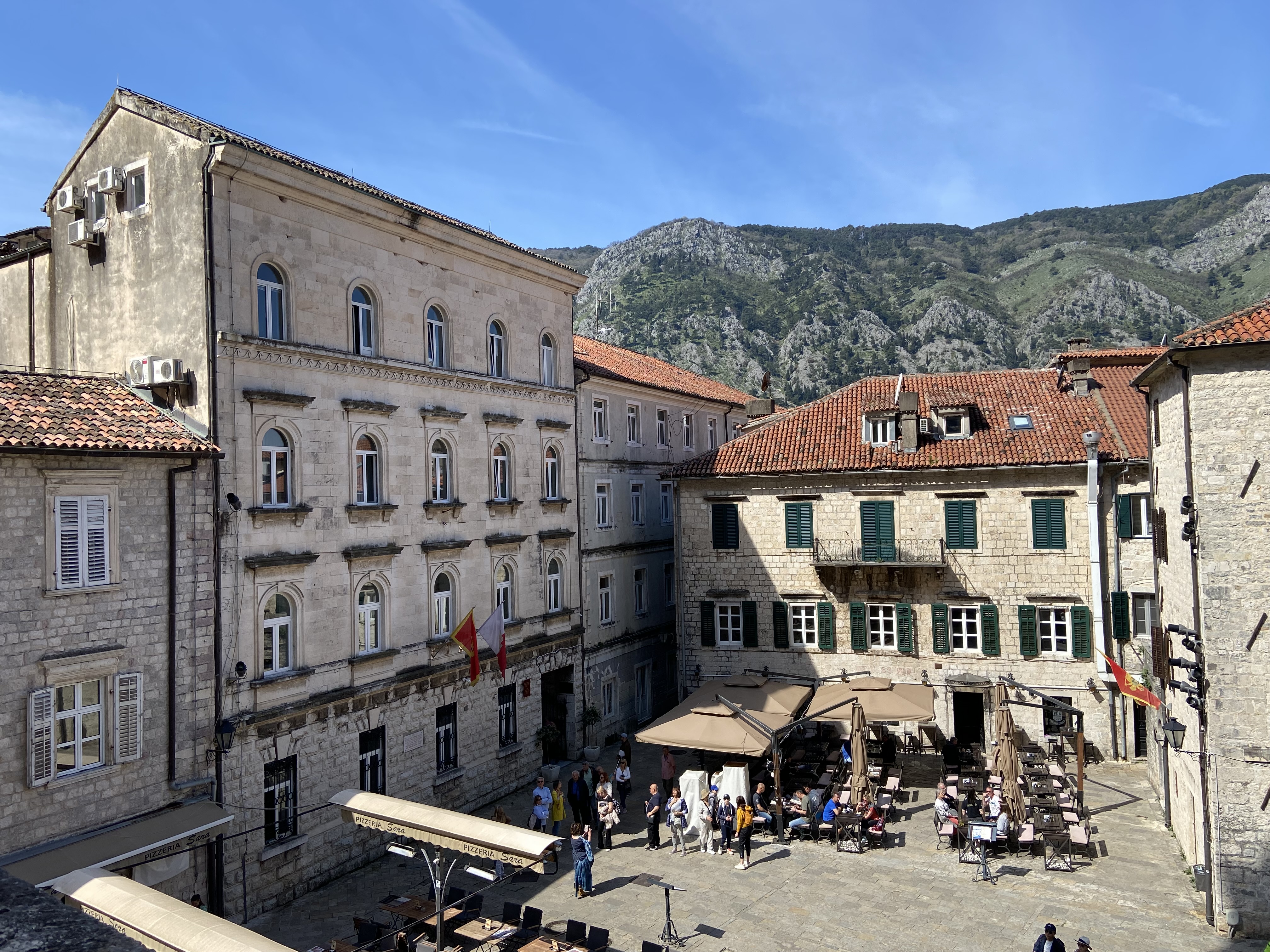
Montenegro Through Images
A visual research layer highlighting the Bay of Kotor, Adriatic towns, Durmitor and Montenegro's mountain landscapes.


Current Government & Institutions
Montenegro's current 44th Government is headed by Prime Minister Milojko Spajić. The Government website states that Parliament voted to reshuffle the 44th Government on 23 July 2026. The cabinet consists of the Prime Minister, seven Deputy Prime Ministers, twenty-five ministries and two Ministers without Portfolio.
Research perspective
Governance research can examine EU accession, public administration, fiscal policy, infrastructure planning, regional development and the relationship between national and local institutions.
History & Cultural Systems
Zeta and regional polities
Medieval political formations contributed to the historical development of the Montenegrin state tradition.
Ottoman frontier & Petrović-Njegoš era
Political institutions, Orthodox religious culture and relations with neighbouring powers shaped the territory.
International recognition
The Congress of Berlin recognised Montenegro as an independent state.
Yugoslav state formations
Montenegro became part of successive Yugoslav political structures.
Restored independence
Montenegro became an independent state following the 2006 independence referendum.
European regional system
Montenegro is studied through Adriatic connectivity, EU integration, tourism, energy, environment and regional development.
Regional Research Map
Podgorica
Capital, administration, universities, services and the country's main central urban system.
Bay of Kotor
Kotor, Perast, Herceg Novi and Tivat connect heritage, maritime activity and tourism.
Budva & Bar
Coastal tourism, ports, urban development, agriculture and Mediterranean connectivity.
Durmitor & North
Mountain tourism, forestry, biodiversity, water systems and balanced regional development.