01
Economy of India
Research entry in the TEDRIC country knowledge directory.
Read More →
India is a vast East Asian country and one of the world's oldest civilizations, known for its immense population, ancient history, rich culture, and significant modern development
India is examined through its geography, population, economic development, political institutions, education, technology, culture, religion, foreign relations and long-term global significance.
India is examined through its geography, population, economic development, political institutions, education, technology, culture, religion, foreign relations and long-term global significance. TEDRIC's country pages bring together country-level studies with regional and global perspectives, allowing developments to be understood within a wider international context.
This page brings the country's available TEDRIC research into one structured research environment. The existing country material is retained while the presentation is reorganised around clear research areas, articles and regional context.
General information, geography, population and social structure.
Economic structure, development, trade, technology and future opportunities.
Political institutions, public policy and governance perspectives.
Foreign relations, regional position and global connections.
History, culture, religion, society and human development.
Long-term risks, opportunities and questions for further research.
Research entry in the TEDRIC country knowledge directory.
Read More →Research entry in the TEDRIC country knowledge directory.
Read More →Research entry in the TEDRIC country knowledge directory.
Read More →Research entry in the TEDRIC country knowledge directory.
Read More →Research entry in the TEDRIC country knowledge directory.
Read More →Research entry in the TEDRIC country knowledge directory.
Read More →Research entry in the TEDRIC country knowledge directory.
Read More →Research entry in the TEDRIC country knowledge directory.
Read More →Research entry in the TEDRIC country knowledge directory.
Read More →Research entry in the TEDRIC country knowledge directory.
Read More →Our research framework brings together multiple disciplines and perspectives to deliver comprehensive, balanced and forward-looking analysis of global and regional developments.
Economic structure, trade, investment, employment, development and future opportunities.
→Education systems, skills, universities, research capacity and human development.
→Innovation, digital transformation, research, technology policy and future capabilities.
→Foreign policy, regional partnerships, strategic relations and global connections.
→Regional stability, security questions, strategic competition and international risks.
→History, culture, religion, society, identity and social transformation.
→Institutions, governance, public policy, legal frameworks and social order.
→Long-term opportunities, structural challenges and questions for further research.
→Connect country research with TEDRIC's regional studies, global topics, library and data resources.
Back to Asia Pacific →India, officially known as the Republic of India, is a sovereign country located in South Asia. It is the world's most populous country and the seventh-largest country by geographical area. Bounded by the Indian Ocean on the south, the Arabian Sea on the southwest, and the Bay of Bengal on the southeast, it shares land borders with Pakistan, China, Nepal, Bhutan, Bangladesh, and Myanmar.
Geography and Climate
India's geography is highly diverse, divided into six main zones:
The climate varies significantly across the regions, ranging from tropical in the south to temperate and alpine in the Himalayan north. The country experiences four main seasons: winter, summer, the monsoon (rainy) season, and post-monsoon.
Demographic Profile
India is characterized by its immense cultural, linguistic, and religious diversity.
Economy
India possesses one of the world's fastest-growing major economies.
Political Structure
India is a federal parliamentary democratic republic.
Conclusion
India stands as a prominent global entity, blending ancient cultural traditions with a rapidly modernizing economy and technological sector. Its vast human capital and strategic geographic location ensure its continued influence on regional and international affairs.
India's economy stands as one of the fastest-growing major economic powerhouses in the world, marked by a nominal GDP of approximately $4.15 trillion in 2026...
India is one of the world's most populous countries and has undergone substantial demographic change since...
The history of India represents one of the world's longest and most complex historical traditions...
Indian politics is shaped by the country’s constitutional democracy, social diversity, federal political structure, and long history of political mobilization...
India is a large and geographically diverse country located in South Asia. Its geographical position, enormous size, varied relief, climate, rivers.....
India’s foreign relations are shaped by its geography, history, economic ambitions, security requirements, civilizational outlook, and aspiration...
India possesses one of the world's largest and most consequential military establishments. Its armed forces—the Indian Army, Indian Navy...
India is characterized by extraordinary cultural, artistic, linguistic, religious, and geographical diversity. Its civilization has developed...
India is one of the world's most religiously and culturally diverse societies. Its religious landscape has developed over several millennia...
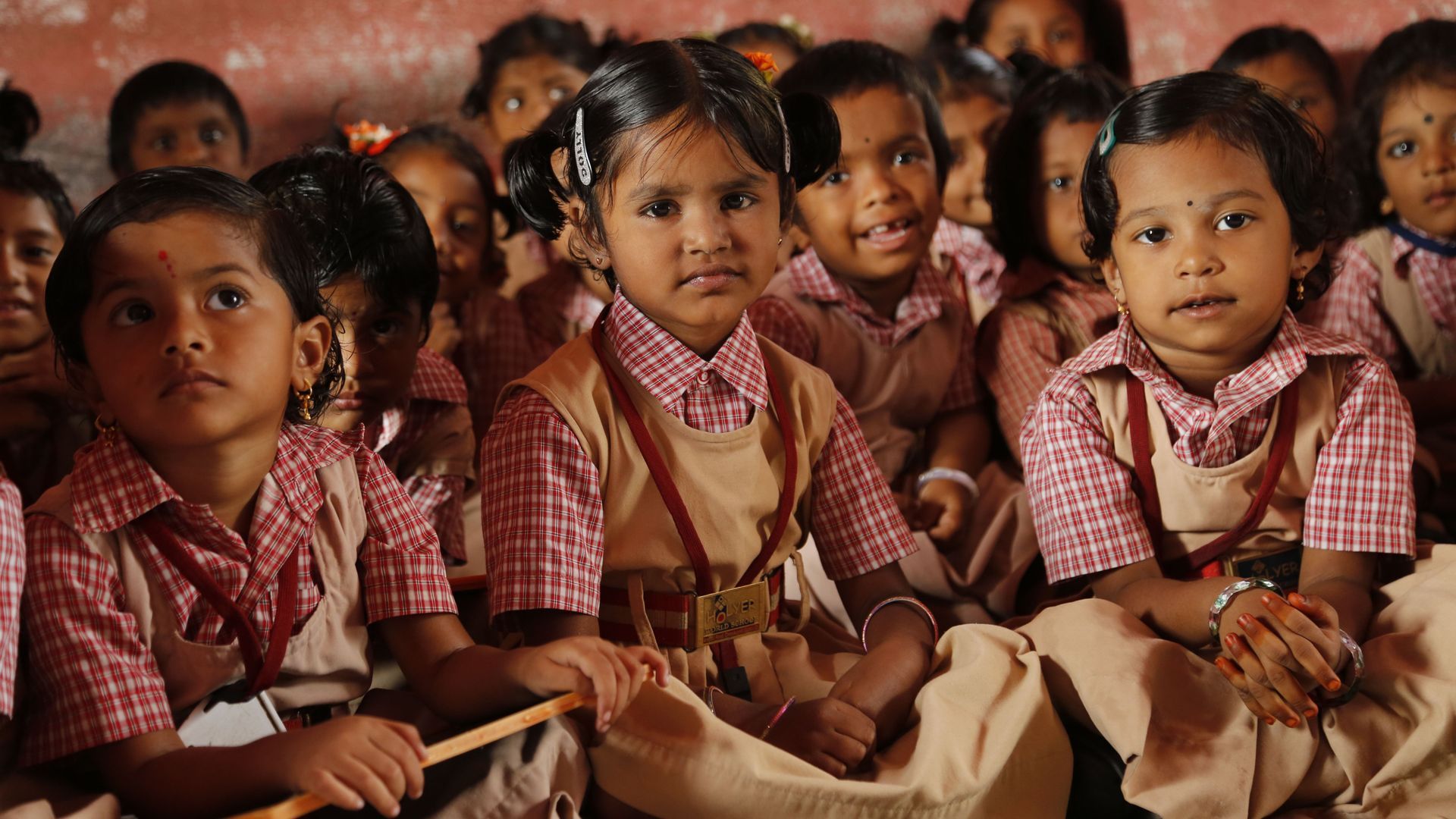
Education is one of the most important foundations of India's social and economic development. With a population exceeding 1.4 billion and a very large school-age and working-age population, India requires an education system capable of providing equitable access, high-quality learning, relevant skills, and opportunities for lifelong development...