
Bosnia and
Herzegovina
A research-centre profile of a Southeast European state shaped by Balkan, Mediterranean and Central European connections — with Sarajevo, Mostar, the Dinaric Alps and the Neretva forming important geographic and cultural reference points.
Bosnia and Herzegovina at a Glance
Bosnia and Herzegovina is a sovereign state in the western Balkans with a complex constitutional structure, a mountainous landscape, a short Adriatic coastline and a society marked by multiple religious and cultural traditions.
Geography & Spatial Structure
The country lies between Croatia, Serbia and Montenegro. Its terrain is dominated by the Dinaric mountain system, river valleys and karst landscapes. Sarajevo is the capital; Mostar is a major cultural and regional centre in Herzegovina; Banja Luka is a major urban centre in Republika Srpska; and Brčko District has a distinct constitutional status.
Dinaric Alps
Mountain systems, karst formations and forested highlands shape settlement, water systems and biodiversity.
Neretva Corridor
The Neretva links Herzegovina to the Adriatic and supports urban, agricultural, energy and tourism systems.

Economy, Trade & Business
Bosnia and Herzegovina combines manufacturing, energy, construction, services, agriculture and tourism. The national statistical agency reports exports of goods of 10.46 billion KM and imports of 18.53 billion KM for January–July 2026, while average net wages reached 1,706 KM in June 2026.
Manufacturing
Metal processing, machinery, furniture, food processing and automotive-related supply chains are important industrial fields.
Energy
Hydropower, thermal generation, grid modernisation and regional energy connectivity are major research themes.
Trade & Connectivity
Road, rail and river corridors connect Bosnia and Herzegovina with Adriatic ports and wider European markets.
Science, Technology & Innovation
Universities
University of Sarajevo, University of Banja Luka, University of Mostar, University of Tuzla and other institutions form the national higher-education network.
Digitalisation
Digital public services, ICT skills, cybersecurity and data infrastructure are relevant to productivity and institutional capacity.
Applied Research
Priority areas can include energy, engineering, agriculture, health technologies, environmental systems and industrial modernisation.
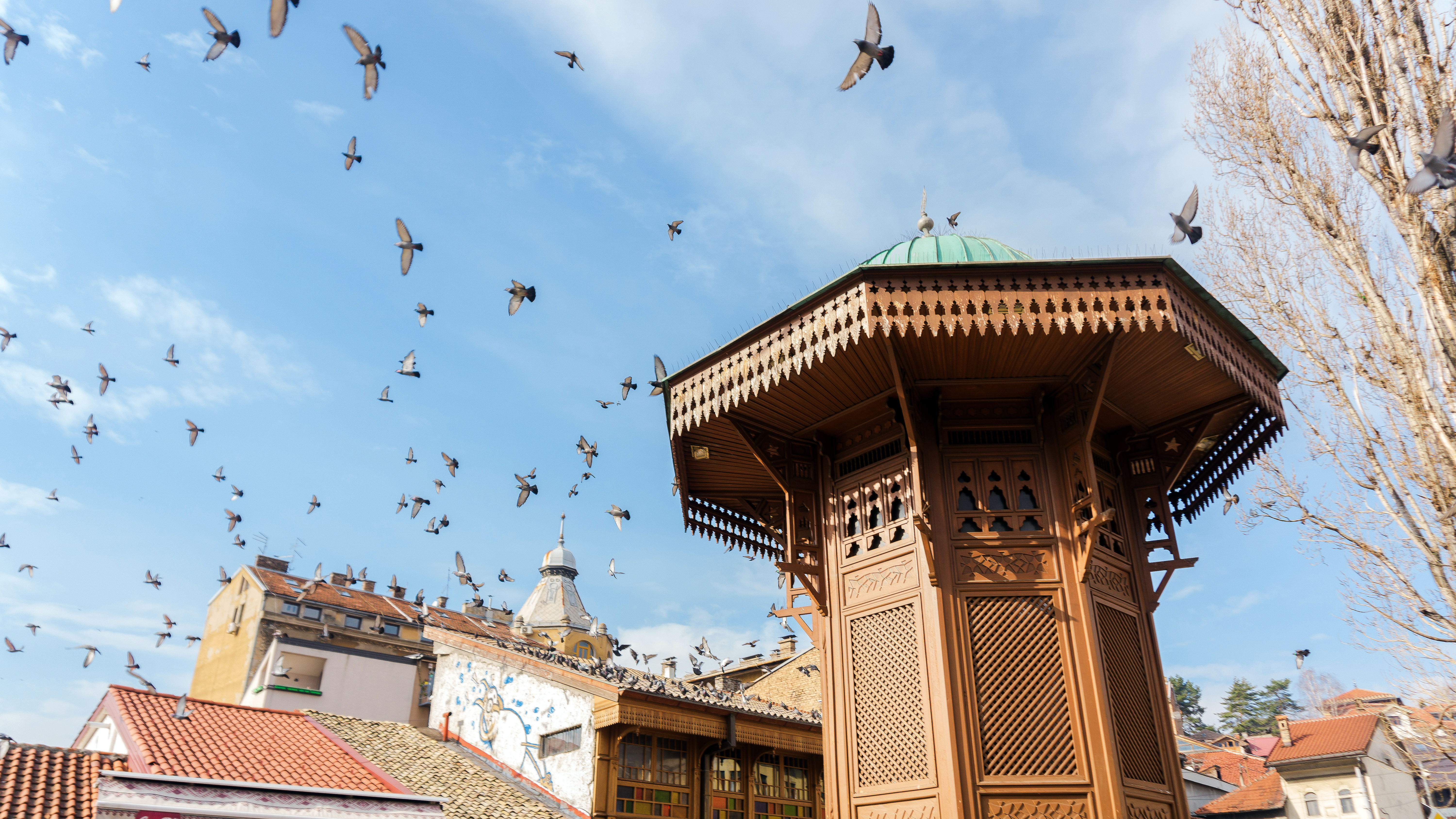
Bosnia and Herzegovina Through Images
A visual research layer highlighting Sarajevo, Mostar, the Neretva and the Buna spring.


.jpg)
Current Institutions & Governance
Bosnia and Herzegovina has a multi-level constitutional system. At the state level, the Council of Ministers is the executive authority and consists of a Chairperson and nine ministers. The official Council of Ministers website identifies Borjana Krišto as Chairwoman in its current institutional and September 2026 announcements.
Research perspective
For TEDRIC, governance research can examine institutional coordination, EU integration, public administration, fiscal structures, infrastructure policy and the relationship between state and sub-state authorities.
History & Cultural Systems
Kingdom and regional polities
Medieval political structures shaped later territorial and cultural identities.
Ottoman period
Ottoman administration and urban culture left a major architectural and social legacy.
Austro-Hungarian administration
Infrastructure, architecture and administrative institutions were substantially transformed.
Yugoslav periods
Bosnia and Herzegovina became part of successive Yugoslav state formations.
Independence
Bosnia and Herzegovina declared independence and entered a major period of political and social upheaval.
European regional research
Contemporary Bosnia and Herzegovina is studied through governance, reconstruction, European integration, economic development and cultural heritage.
Regional Research Map
Sarajevo
Capital, government, universities, services and cultural institutions.
Mostar & Herzegovina
Neretva corridor, tourism, heritage, energy and Mediterranean connections.
Banja Luka
Major urban centre, administration, education and service economy.
Tuzla & Northeast
Industry, energy, education and urban-regional transformation.