
CROATIA
A research profile of a Central European and Adriatic country shaped by European integration, maritime geography, tourism, manufacturing, science, culture and a highly distinctive regional landscape.
Croatia at a Glance
Croatia combines a compact Central European state structure with a long Adriatic coastline, a large island system, continental agricultural regions and a strong cultural-heritage base. The latest official population estimate places the mid-2025 population at 3,874,993.

Croatia’s geography connects Central Europe, the Pannonian basin and the Adriatic.
A Diversified European Economy
Official statistics show real GDP growth of 1.7% year-on-year in Q2 2026, with exports of goods and services increasing 3.0% in real terms. The second quarter current-price GDP value was €24.976 billion.
Ports & Logistics
Rijeka and the northern Adriatic connect Croatian transport corridors with Central European markets.
Manufacturing
Industrial activity spans food, machinery, chemicals, pharmaceuticals, electrical equipment and other manufacturing segments.
Tourism & Services
Coastal destinations, heritage cities, islands and national parks make tourism a major component of the service economy.
Agriculture & Food
Continental Croatia supports agriculture and food production, while regional products link rural economies with tourism.
Construction
Infrastructure, housing, tourism facilities and reconstruction support construction activity across regions.
European Integration
EU membership and euro-area participation shape investment, trade, financial conditions and policy coordination.
Adriatic Cities, Islands & Landscapes
Croatia’s physical geography is one of its defining research assets: dense historic cities, karst landscapes, islands, forests, mountains and the Adriatic coast form a highly varied spatial system.
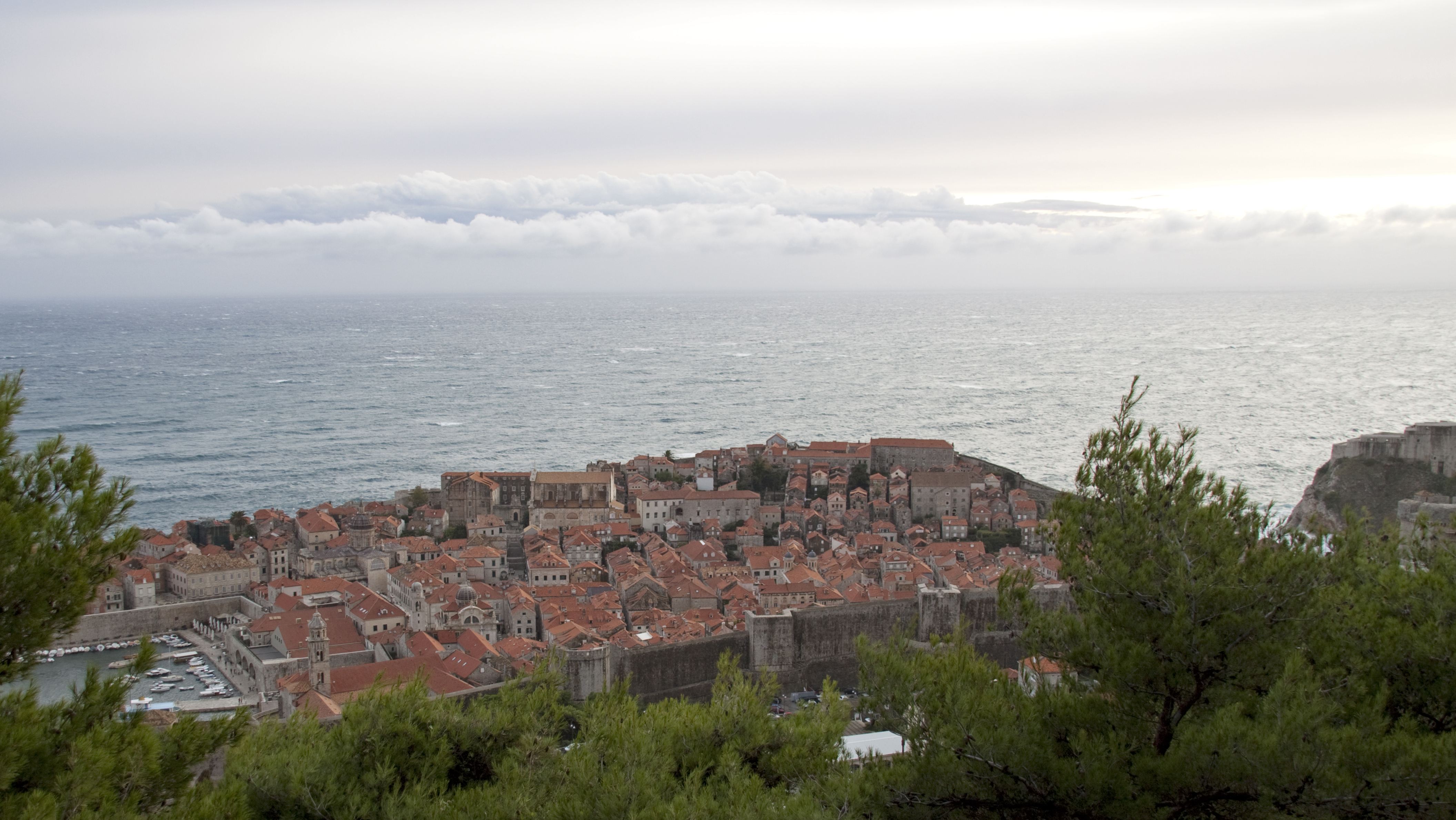 Dubrovnik — Adriatic heritage city
 Plitvice Lakes — natural heritage
 Split — Roman and Adriatic urban heritage
 Zagreb — national capital and research centre
 Hvar — island and maritime landscape
 Rovinj — Istrian coastal heritage
Population, Labour & Regional Change
The mid-2025 estimate recorded 3.875 million inhabitants, 0.2% more than the previous year. In Q2 2026, Croatia had an estimated 1.723 million employed people and an unemployment rate of 4.7% for ages 15–64.
Demography
Population trends vary strongly between Zagreb, Adriatic counties, northern Croatia and several eastern and inland areas.
Labour Market
Employment reached 69.2% among people aged 15–64 in Q2 2026, while survey unemployment was 4.7%.
Education
Universities and professional institutions provide the national base for higher education, research and skills formation.
Health
Health-system research intersects with ageing, regional access, preventive care and biomedical innovation.
Migration
International migration contributes to population change and affects labour supply, settlement patterns and public services.
Regional Balance
Zagreb has the largest concentration of population and R&D expenditure, while Adriatic and northern regions have distinct economic profiles.
A Country at the Crossroads of Central Europe and the Adriatic
Roman & Late Antique Heritage
Urban centres such as Split preserve major Roman-era architectural and archaeological layers.
Medieval Croatian Polities
Medieval state formation and Adriatic city networks shaped the political and cultural geography of the territory.
Habsburg & Adriatic Connections
Large parts of the Croatian lands developed within Central European and Habsburg political frameworks, alongside autonomous Adriatic traditions.
1918–1945
The twentieth century brought successive changes in state structures and political systems across the wider South Slavic space.
1991 Independence
Croatia declared independence in 1991, followed by the consolidation of the modern Croatian state.
European Integration
Croatia joined NATO in 2009, the European Union in 2013 and adopted the euro in 2023.
Different Croatias Within One State
Zagreb & Northern Croatia
Capital-city governance, universities, finance, services, technology and the largest concentration of national R&D activity.
Istria & Kvarner
Tourism, maritime economy, manufacturing, cultural heritage and strong cross-border European connections.
Dalmatia
Split, Dubrovnik, islands, tourism, ports, marine ecosystems and coastal urbanisation.
Slavonia & Pannonian Croatia
Agriculture, food systems, logistics, demographic change and industrial transition.
Mountain & Karst Croatia
Forests, protected landscapes, water systems, biodiversity, rural settlement and climate adaptation.
Adriatic Islands
Island connectivity, seasonal populations, marine biodiversity, tourism pressure and resilience.
Official Croatian Research Sources
The country profile uses current official statistics and government information where available.