
Denmark
A compact Nordic economy with a strong maritime tradition, globally connected industry, advanced life sciences, extensive wind-energy expertise, digital public services and a distinctive cultural landscape shaped by islands, coastlines and the wider Danish Realm.
Denmark at a Glance
Nordic geography, maritime connectivity & a highly open economy
Denmark is a Northern European country built around the Jutland peninsula and an archipelago of islands. Its position between the North Sea and Baltic Sea has shaped trade, shipping, fisheries, agriculture, energy infrastructure and links with Scandinavia and continental Europe.
The Kingdom of Denmark also includes Greenland and the Faroe Islands, which have extensive self-government and distinct geographic and social systems. Denmark itself is a member of the European Union and uses the Danish krone.
Denmark & the Danish Realm

Mainland Denmark, islands and its position in Northern Europe. Greenland and the Faroe Islands form part of the Kingdom of Denmark but are geographically separate.
Denmark Country Research Agenda
Economy & Business
Productivity, exports, investment, taxation, services, SMEs and the interaction between domestic demand and globally active firms.
Shipping & Ports
Maritime transport, container logistics, green shipping, port infrastructure and Denmark's international shipping ecosystem.
Life Sciences
Pharmaceuticals, biotechnology, diagnostics, clinical research, health data and medical technology.
Wind & Climate
Wind power, offshore energy, electrification, grid expansion, energy storage and climate adaptation.
Technology & Digitalisation
AI, automation, digital public services, cybersecurity, robotics and data-driven innovation.
Agriculture & Food
Food production, agricultural technology, biosolutions, fisheries, export chains and sustainable land use.
Education & Research
Universities, vocational education, research institutions, skills and knowledge transfer.
History, Culture & Art
Viking heritage, monarchy, literature, design, architecture, museums and contemporary cultural life.
Religion & Belief
National Church membership, secularisation, Christianity and the wider landscape of recognised religious communities.
Mette Frederiksen & Denmark's Government
Mette Frederiksen
The Danish Prime Minister's Office identifies Mette Frederiksen as Prime Minister. The official government portal provides information on the Prime Minister, the Government and government meetings.
For TEDRIC research, Denmark's political system is examined descriptively through institutions, legislation, public administration, coalition arrangements and policy documents rather than political evaluation.
Prime Minister's Office · Denmark →Institutional structure
Denmark is a constitutional monarchy with a representative parliamentary system. The monarch is head of state, while the Prime Minister leads the government. Greenland and the Faroe Islands have their own governments and parliaments for most domestic matters.
Folketing
Prime Minister
Public administration
Danish Economy: Open, Export-Oriented & Knowledge Intensive
Macroeconomic indicators
Statistics Denmark reports real GDP growth of 0.3% in Q2 2026 compared with the previous quarter. Inflation was 2.0% in August 2026 and register-based unemployment was 3.1% in July 2026.
Key economic sectors
Denmark's economy combines services with internationally connected manufacturing and specialist sectors. Pharmaceuticals and life sciences, maritime activities, energy technologies, food and agriculture, machinery, design and digital services are important research fields.
Denmark's Wind Energy & Green Transition
From wind farms to integrated energy systems
Denmark has developed extensive expertise in wind power, including offshore wind. Official Danish sources describe renewable energy, wind and biomass as central parts of the country's energy system. Research now increasingly concerns grid flexibility, storage, electrification, Power-to-X and integration of variable renewable generation.
Climate engineering & coastal resilience
Denmark's low-lying coastal geography makes sea-level rise, storm surges, flood protection, urban drainage and resilient infrastructure relevant research areas. Offshore energy development also creates questions around marine ecosystems, fisheries and spatial planning.
Denmark's digital and engineering capabilities connect climate research with smart grids, sensor systems, urban planning and industrial efficiency.
Life Sciences, Healthcare & the Bioeconomy
Pharmaceuticals
Pharmaceutical research, manufacturing and exports are major parts of Denmark's knowledge-intensive economy.
Biotechnology
Biotech connects universities, hospitals and companies through research, diagnostics and industrial applications.
Healthcare
Research covers prevention, public health, hospital systems, health data, ageing and digital health.
Food & Agriculture
Precision agriculture, food science, animal health, biosolutions and sustainable production are significant research fields.
Industrial Biosolutions
Enzymes, fermentation, bio-based materials and biological processes connect sustainability with industrial innovation.
Water & Environment
Water quality, marine ecosystems, nutrient management and climate adaptation connect environmental science to policy.
Research Denmark: Universities, Technology & Digital Society
Artificial Intelligence
Machine learning, language technologies, robotics, healthcare AI and industrial automation are growing research areas.
Digital Government
Denmark's highly digital public administration provides a major field for research into identity, data governance, cybersecurity and service design.
Robotics & Automation
Industrial robotics, collaborative systems, logistics automation and advanced manufacturing connect research to export industries.
Life Sciences
Biomedical research, pharmaceuticals, biotechnology and health data form a strong science-industry interface.
Design & Architecture
Design research links human-centred systems, architecture, materials, mobility and urban life.
Marine Technology
Ocean observation, maritime engineering, offshore energy and marine environmental research are closely interconnected.
What the Official Statistics Show
National Church membership
Statistics Denmark reports 4,210,480 members of the National Church in Q3 2026. The underlying statistics use the Central Population Register and information supplied by the Ministry of Ecclesiastical Affairs.
Beyond membership
Statistics Denmark explicitly notes that it does not hold complete information on all religious communities. Recognised-community membership information is therefore supplemented by sources such as the Centre for Contemporary Religion at Aarhus University and other specialist institutions.
This distinction is important for research: administrative church membership is a measurable category, while belief, practice, spirituality and non-religious worldviews require different research methods.
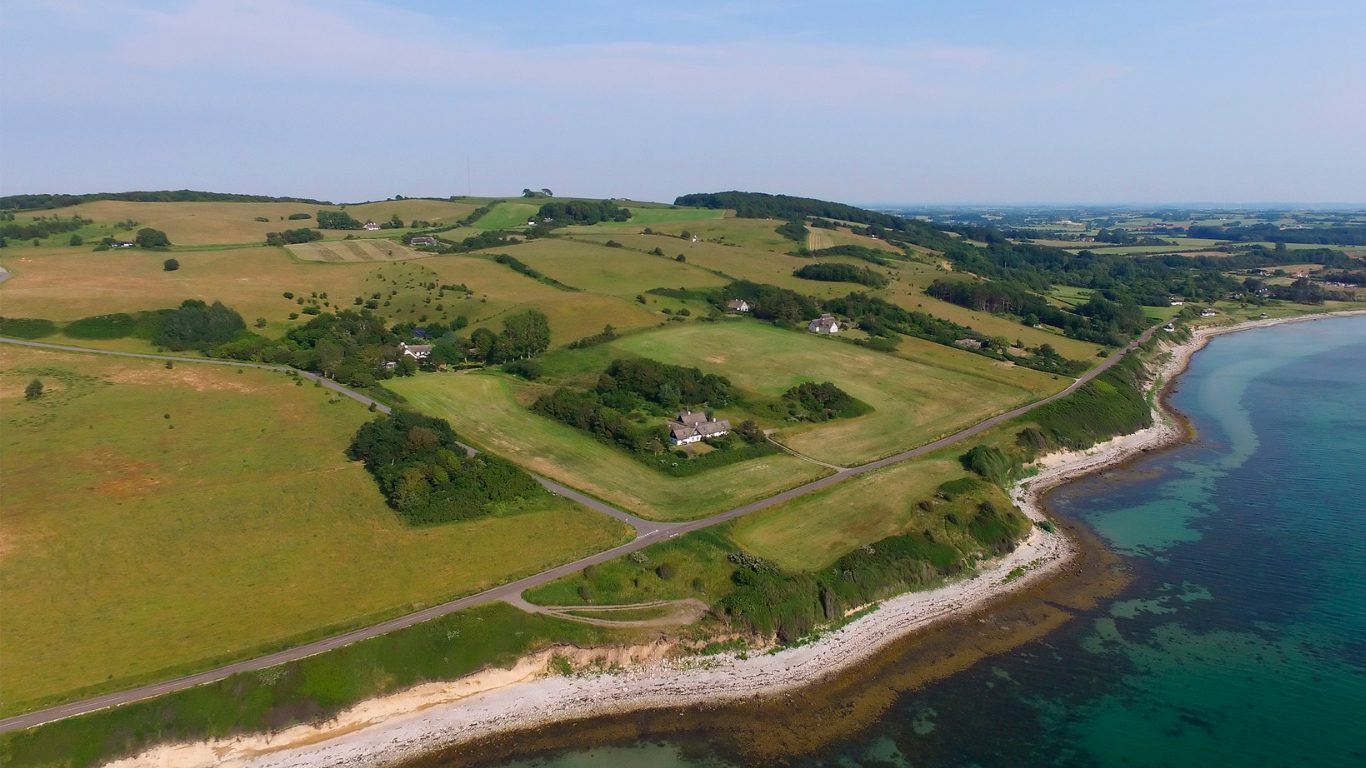
Cities, Maritime Heritage, Wind & Landscape


Population, Labour & Human Development
Population dynamics
Statistics Denmark recorded a population of 6,032,304 in August 2026. Population research includes fertility, ageing, migration, urbanisation, regional balance and the relationship between demographic change and welfare services.
Education & skills
Denmark's research system includes universities, university colleges and vocational education. Skills policy is closely connected to labour-market participation, technological change, continuing education and productivity.
Research themes include lifelong learning, STEM education, digital skills, vocational training, inclusion and the transition from education into employment.
A Long Historical Perspective
Maritime Expansion
Scandinavian seafaring, trade networks, settlements and political consolidation shaped Denmark's early historical geography.
Kingdom & Christianity
Christian institutions, monarchy, towns and trade became increasingly important to Danish state formation.
Monarchy & Maritime Power
Denmark's position around the Baltic and North Sea connected political history with shipping, commerce and European rivalries.
Constitution & Industrialisation
Constitutional government, industrialisation, social organisation and modern national institutions transformed Danish society.
Nordic Welfare & Global Economy
Modern Denmark combines parliamentary institutions, welfare-state arrangements, open trade, digitalisation and international cooperation.
Copenhagen, Aarhus, Odense & Regional Denmark
Copenhagen
Capital, national institutions, finance, culture, universities, design and international connectivity.
Aarhus
Major port, university city, research, culture, logistics and growing urban development.
Odense
Island of Funen, literary heritage, robotics and a regional knowledge economy.
North & West Jutland
Wind, coastal economies, agriculture, fisheries, ports and rural innovation.
Denmark: Key Research Priorities
Energy & climate
Grid capacity, offshore wind, storage, Power-to-X, biodiversity and coastal resilience.
Productivity & competitiveness
Skills, automation, business investment, export resilience and the productivity effects of digitalisation.
Ageing & welfare
Demographic change, healthcare demand, pensions, labour supply and intergenerational policy.
Green shipping
Alternative fuels, vessel efficiency, ports, marine infrastructure and international maritime regulation.
Digital society
AI, cybersecurity, data governance, digital identity and public-service accessibility.
Food & bioeconomy
Low-impact agriculture, food technology, biosolutions, animal health and marine resources.
Denmark Research Directory
Maritime & Logistics
Shipping, ports, maritime technology, trade corridors and green shipping.
Life Sciences
Pharmaceuticals, biotechnology, healthcare and health data.
Energy & Climate
Wind, grids, storage, Power-to-X and coastal resilience.
Technology & Digital
AI, robotics, cybersecurity, digital government and data.
People & Communities
Education, labour, migration, ageing and welfare systems.
Culture & Heritage
History, design, architecture, literature, museums and tourism.
Statistics are labelled with their reference period. Institutional and political information is presented descriptively from official sources. Religious statistics are distinguished from broader measures of belief and practice.