

Jordan
A strategic Middle Eastern kingdom positioned at the intersection of the Levant, the Arabian Peninsula and the wider Mediterranean–Red Sea corridor. Jordan combines geopolitical importance, human capital, cultural heritage and regional connectivity with significant water, energy and resource constraints.
Jordan Research Profile
Jordan occupies a distinctive position in the Middle East. Its location, political stability relative to parts of its neighbourhood, educated population, historic cities and internationally recognised cultural heritage make it an important subject for strategic, economic and social research.
Country Overview
Data Profile
Amman
Arabic
Jordanian Dinar
Constitutional monarchy
Levant and Arabian Peninsula
Water, human capital, technology and regional security
History & Geography
Jordan forms part of the historical Levant, a region connecting Africa, Asia and the Mediterranean world. Its territory has been shaped by ancient kingdoms, Roman and Byzantine civilisation, Islamic empires and modern state formation.
The country includes the Jordan Valley, highland regions, desert landscapes and the Red Sea gateway of Aqaba. This geographic diversity contributes to its strategic importance and environmental challenges.
National Landscape
Highlands
Population concentration, agriculture, cities and institutional activity.
Jordan Valley
A productive agricultural corridor with major water-management significance.
Eastern Desert
Large arid territories with strategic potential for solar energy and infrastructure.
Economy
Jordan's economy is diversified across services, tourism, manufacturing, pharmaceuticals, ICT, logistics, construction and mining. Limited natural resources increase the importance of human capital, trade connectivity, investment and productivity.
Major contributor to economic activity and employment.
Petra, Wadi Rum, Aqaba and religious heritage provide international potential.
Pharmaceuticals, chemicals, fertilisers and manufacturing remain important.
Macroeconomic Development
Jordan's macroeconomic trajectory is closely connected to external trade, tourism, remittances, energy prices, regional stability and international financial support. Fiscal sustainability and employment creation remain central policy challenges.
Strategic Transformation
Digital Economy
Expansion of digital public services, entrepreneurship and technology ecosystems.
Green Transition
Renewable energy and water efficiency are central to long-term resilience.
Human Capital
Education and skills development remain fundamental to employment creation.
Politics & Governance
Jordan operates as a constitutional monarchy with national institutions centred on the monarchy, government, parliament and public administration. Governance capacity and political stability are important components of the country's regional role.
Monarchy, government, parliament and public administration.
Strategically significant within a volatile regional environment.
Economic and institutional modernisation remain important policy themes.
Transformation Timeline
Formation of the Emirate of Transjordan.
Jordan becomes an independent kingdom.
Jordan signs a peace treaty with Israel.
Expansion of economic reform, digitalisation, renewable energy and investment strategies.
Economy & Business
Pharmaceuticals
A major knowledge-intensive industrial sector with export potential.
ICT
Digital entrepreneurship and technology services provide growth opportunities.
Logistics
Aqaba and regional road networks connect Jordan with surrounding markets.
Population & Demography
Jordan has a relatively young population and has experienced major demographic changes associated with regional migration and refugee flows. Urban concentration is particularly strong around Amman and other major cities.
Approximately 11.5 million.
High concentration in major urban centres.
Young population creates both opportunity and employment pressure.
Education & Human Capital
Education is one of Jordan's most important strategic assets. Universities, professional education and a comparatively educated workforce provide a foundation for services, technology and knowledge-based industries.
Universities
Higher education contributes to national human-capital development.
Skills
Digital and technical skills are increasingly important for employment.
Research
University–industry cooperation can strengthen innovation capacity.
Science, Technology & Innovation
Healthcare & Social Development
Jordan has developed a broad healthcare infrastructure and a significant medical-services sector. Public health, specialist medicine, pharmaceutical production and healthcare education are important components of the national system.
Public and private providers form a diversified healthcare system.
Jordan has developed regional capabilities in specialist treatment.
A strategic export-oriented knowledge industry.
Infrastructure & Digital Transformation
Aqaba
Jordan's primary maritime gateway and a major logistics asset.
Transport
Road and regional connectivity remain central to trade development.
Digital Government
Digital public services can improve administrative efficiency and accessibility.
Environment & Climate
Water scarcity is one of Jordan's defining environmental challenges. Climate change, population pressure and limited renewable water resources make efficient water management strategically important.
Water
Water security is a national strategic priority.
Solar Energy
High solar potential creates opportunities for renewable-energy expansion.
Climate Resilience
Adaptation planning is essential for long-term national resilience.
International Relations & Geopolitics
Jordan plays an important diplomatic and security role in the Middle East. Its location places it close to major regional conflicts and strategic corridors while also providing opportunities for international cooperation.
Central position within the eastern Mediterranean and Levant.
Strong diplomatic and economic relationships across the Arab world.
International cooperation supports development, security and investment.
Defence & Security
Jordan's security environment is strongly influenced by its borders, regional conflicts, terrorism risks, refugee movements and strategic relationships. National defence institutions therefore have an important role in maintaining territorial and internal security.
Border Security
Critical because of Jordan's position between several conflict-affected areas.
Counterterrorism
Regional security cooperation remains strategically important.
Strategic Partnerships
Defence cooperation contributes to national and regional security.
Trade, Investment & Diversification
Cities & Urban Systems
Political, economic, educational and cultural centre of the country.
Port city and strategic gateway to the Red Sea.
Important industrial and population centre.
Faith & Religious Heritage
Jordan contains important Islamic and Christian heritage sites and forms part of the wider sacred geography of the Levant. Religious heritage is closely connected to tourism, archaeology and cultural diplomacy.
Islamic Heritage
Early Islamic history and architecture form an important part of Jordan's heritage.
Christian Heritage
Biblical and early Christian sites attract international visitors.
Religious Tourism
Faith-based travel complements Jordan's archaeological and cultural tourism.
Petra & Nabataean Heritage
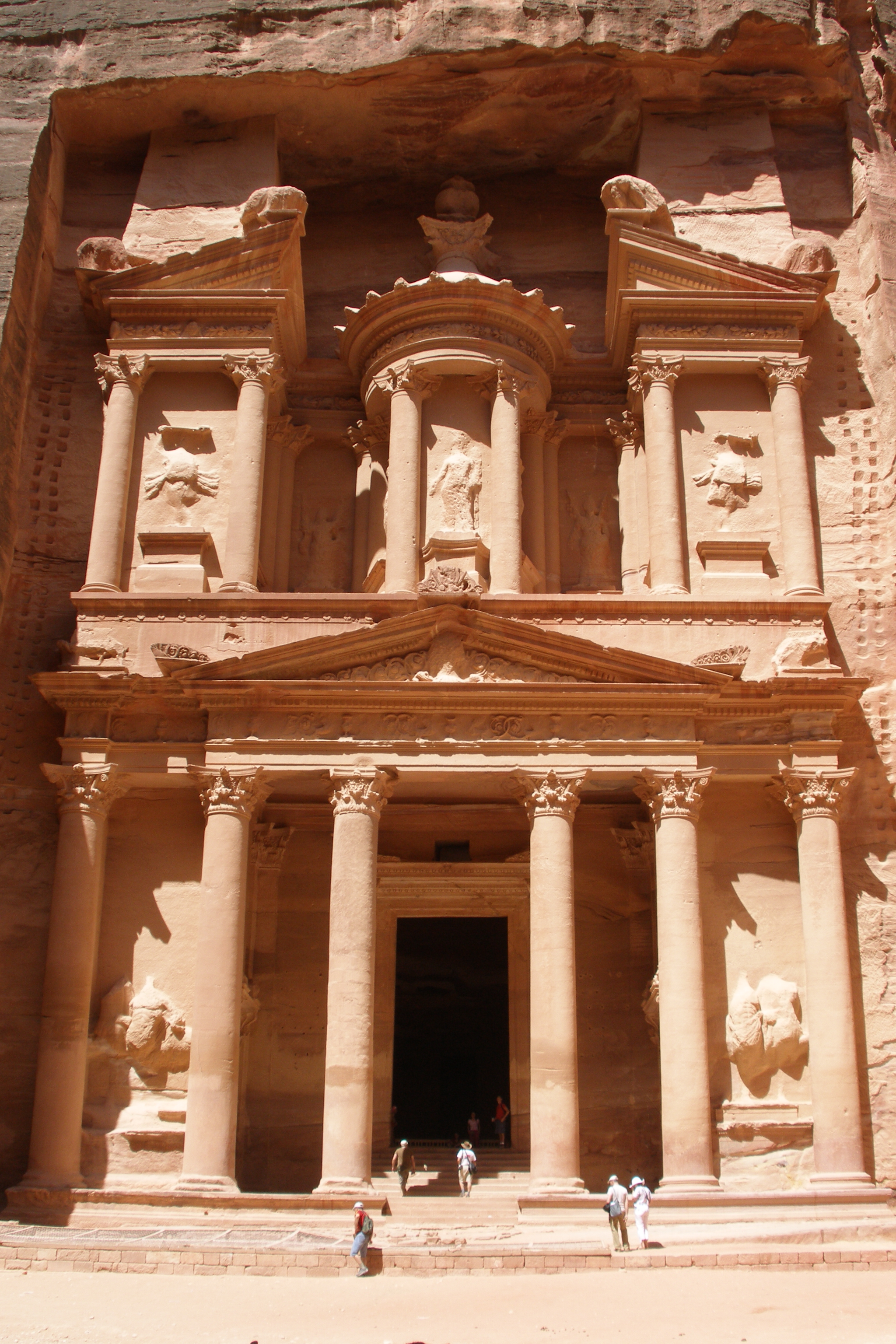
Petra represents one of Jordan's most internationally recognised archaeological landscapes. The Nabataean city demonstrates sophisticated architecture, water management, trade networks and cultural exchange.
Its global significance makes heritage conservation and sustainable tourism central to Jordan's cultural economy.
UNESCO World Heritage
Nabataean archaeological city.
Important early Islamic architectural heritage.
Natural and cultural desert landscape.
Historic urban and cultural landscape.
Natural Environment
Wadi Rum
Distinctive desert landscape with major ecological and tourism value.
Dead Sea
A globally distinctive saline environment with tourism and scientific importance.
Red Sea
Aqaba provides marine ecosystems and strategic coastal resources.
Tourism & Cultural Economy
Tourism is one of Jordan's most visible international economic sectors. Archaeological sites, religious heritage, desert landscapes, the Dead Sea and Aqaba create a diversified tourism portfolio.
Strategic Outlook
Jordan's long-term development will depend on its ability to strengthen human capital, manage water scarcity, expand renewable energy, develop technology-driven sectors, improve investment conditions and maintain strategic regional connectivity.
TEDRIC Research Priorities
Water Security
Research into desalination, recycling, efficiency and climate resilience.
Human Capital
Education, employment, skills and knowledge-based economic development.
Digital Transformation
AI, cybersecurity, digital government and technology entrepreneurship.
Energy Transition
Renewables, grid development, storage and energy security.
Regional Security
Geopolitics, borders, migration and regional stability.
Cultural Economy
Heritage conservation, tourism and sustainable cultural development.
TEDRIC Perspective
From a TEDRIC research perspective, Jordan should be analysed as a country where geopolitics, demographic change, human capital, environmental pressure, heritage and technological transformation intersect.
The country's future competitiveness will depend on converting these structural challenges into areas of innovation, regional cooperation and knowledge-based growth.
TEDRIC Research Dashboard
Research Sources
- World Bank — Jordan country and development data
- UNESCO World Heritage Centre — Jordan
- Jordan Department of Statistics
- Central Bank of Jordan
- Government of Jordan — national development and economic programmes
- TEDRIC Research Centre — comparative country and regional research
Jordan
Country research prepared within the TEDRIC Middle East Research Directory, connecting national development, economics, society, technology, heritage, environment and geopolitics.
TEDRIC — Research, Knowledge & Strategic Analysis