
01 / MAKKAH
Makkah
The holiest city in Islam and the destination of the annual Hajj, centred on the Masjid al-Haram and the Kaaba.
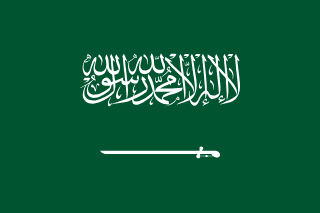
A comprehensive country research profile examining Saudi Arabia through geography, society, religion, economy, science, technology, international affairs, culture and strategic development.
A pivotal Arabian Peninsula state shaped by the significance of Makkah and Madinah, the global importance of Hajj, major energy resources and an ambitious programme of economic transformation.
Saudi Arabia occupies a central position in the Arabian Peninsula and the wider Middle East. Its territory connects the Red Sea, Arabian Gulf and the major routes linking the Middle East with Africa and Asia.
The country combines major energy resources, a large domestic market, extensive infrastructure, important financial centres, religious significance and an increasingly diversified economic base.
Its strategic importance extends beyond economics. Makkah and Madinah give Saudi Arabia an exceptional position in the Islamic world, while its geographic location gives it substantial relevance to regional security, logistics and international trade.
Red Sea, Arabian Gulf and Arabian Peninsula connectivity.
Energy strength combined with diversification and investment.
Major diplomatic, economic and security role in the region.
The religious geography of Saudi Arabia is one of the country's defining global characteristics, connecting its national identity with a worldwide network of pilgrimage, scholarship and faith.
The holiest city in Islam and the destination of the annual Hajj, centred on the Masjid al-Haram and the Kaaba.

A major centre of Islamic history and scholarship, home to Al-Masjid an-Nabawi and deeply connected to the life of the Prophet.

Hajj represents one of the world's largest annual religious gatherings and requires extensive transport, accommodation, health, water and urban-management systems.
The 2025 Hajj involved more than 1.67 million pilgrims, illustrating the scale of Saudi Arabia's responsibility for global pilgrimage infrastructure and management.
Hajj requires the coordination of transport, accommodation, public health, security, water, sanitation, food distribution, crowd movement and emergency response.
From a TEDRIC research perspective, Hajj provides a unique case study in large-scale urban management, international mobility, logistics and religious geography.
A geographically vast state connecting major maritime and continental environments.
Makkah, Madinah and the history of Islam remain central to the country's global identity.
Contemporary Saudi Arabia combines historical institutions with rapid infrastructure and economic transformation.


Saudi Arabia remains one of the largest economies in the Middle East. Energy remains strategically important, while investment in tourism, logistics, technology, manufacturing, infrastructure and services is reshaping the economic structure.
Economic diversification is therefore one of the central areas for long-term TEDRIC research.
Oil, gas, refining, petrochemicals and energy transition.
Heritage, pilgrimage, hospitality and emerging destinations.
Riyadh's expanding role as a regional financial centre.
Digital infrastructure, AI, data and innovation ecosystems.
Water security is one of the most important long-term development questions for Saudi Arabia. The country's arid climate, limited renewable freshwater resources and rapidly developing urban systems make efficient water management strategically important.
Desalination, wastewater treatment, infrastructure efficiency, agricultural water use, groundwater management and climate resilience are therefore central areas for future research.
AI and data infrastructure are becoming increasingly important to Saudi Arabia's digital transformation.
Universities, research centres and technology institutions support the development of knowledge-intensive sectors.
Digital services, connectivity and data systems are increasingly integrated into national development.
Saudi Arabia's geographic location, economic weight and religious significance make it a major actor in regional and international affairs.
Engagement across the Gulf, Arab world and wider Middle East.
Strong connections with global energy, investment and financial markets.
Strategic relevance to Gulf security, maritime routes and regional stability.
Makkah and Madinah provide a unique global religious and cultural connection.
The archaeological landscape of Hegra represents an important chapter of the ancient Nabataean heritage of the Arabian Peninsula.
Al-Balad preserves a distinctive historic urban environment shaped by Red Sea commerce, architecture and pilgrimage routes.
Al-Ahsa represents a distinctive cultural and environmental landscape combining oasis traditions, settlement and agriculture.
TEDRIC can examine Saudi Arabia through interconnected research questions linking economic transformation, human capital, technology, water security, religious geography, international affairs, culture and long-term resilience.
Saudi Arabia should be examined not through a single economic, political or religious lens, but as an interconnected country whose geography, sacred cities, energy resources, economic transformation, technological ambitions and international position shape its future role in the Middle East and the wider world.
Explore TEDRIC Research